Your eyebrows are very important to the structure of your face and highlight your natural features. Choosing the right hair removal option can really make a difference in the appearance of your brows. If you compare eyebrow threading vs waxing, the question arises about which option presents better effects, has longevity, and is suitable for your skin type.
Unfortunately, there is no definite answer to this question. Your choice really depends on your skin sensitivity, hair type, desired brow shape, and personal preferences.
This article will provide you with an explanation of the working principles of both methods, their benefits and disadvantages, as well as which one is better depending on your preferences.
What is Eyebrow Threading?
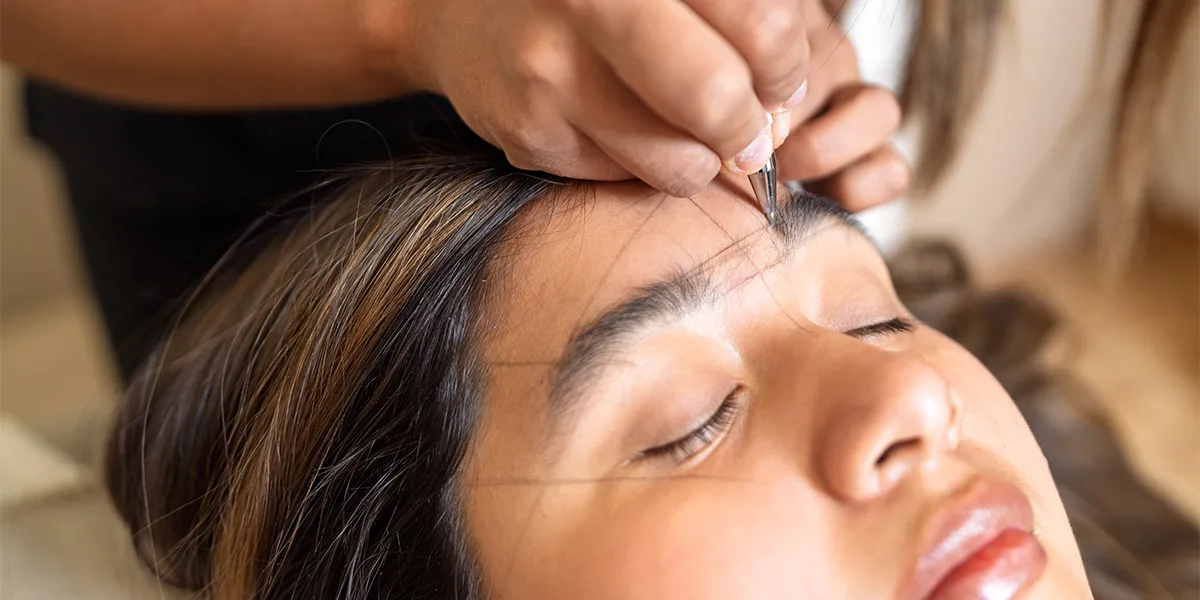
Eyebrow threading is a process of hair removal that is performed by using a thin piece of thread made from cotton that is twisted and rolled across unwanted eyebrow hairs. When the thread rolls, it grips and removes the hair from the roots without having to use wax or chemicals.
How It Works
A technician who has received proper training takes a cotton thread, forms it into a loop, and then runs it over the skin. While the thread is moving, it catches the unwanted hairs and pulls them out from the follicle, thus enabling accurate shaping of the eyebrows.
Best For:
Eyebrow threading is ideal for precise shaping, sensitive skin, and clean hair removal from the root. It provides sharp definition, avoids chemicals, and lasts for 3 to 5 weeks.
Pros:
- Allows for very precise eyebrow shaping.
- Removes hair from the root.
- No products are necessary – no wax and no chemicals.
- Method is suitable even for sensitive skin.
- Quick treatment (typically 10–20 minutes).
- Results of the procedure last from 2 to 5 weeks depending on the hair growth.
Cons:
- The method can be a little painful.
- After the procedure, your skin may get red temporarily.
- You need to work with a skilled threader to achieve maximum results.
- Not effective for large body areas.
- Your hair has to be long enough for the thread to hold it.
What is Eyebrow Waxing?
Eyebrow waxing is a hair removal method that uses warm or cold wax to take out several eyebrow hairs at once from the root. The wax is spread on the unwanted hair, and a strip, or the wax itself if it’s hard wax, is pulled away quickly. This removes the hair from the follicle. As a result, you get a clean, defined eyebrow shape that usually lasts longer than shaving or trimming.
How It Works
Here are the simple steps to follow:
- Cleaning: To cleanse the area around the eyebrows, makeup removal procedures are employed to ensure there are no oily residues, dirt, or any skincare products present.
- Brow Mapping: The desired eyebrow shape is planned or marked using an eyebrow pencil to create a balanced and symmetrical look.
- Applying Wax: A thin layer of either soft or hard warm wax is applied onto the unwanted hairs.
- Removing Hair: For soft wax, a paper or cloth strip is pressed onto the wax. It is then pulled off quickly against the direction of hair growth. With hard wax, the hardened wax is lifted off directly without a strip. This method removes the hair from the root.
- Finishing Touches: Any remaining stray hairs are removed with tweezers for a more precise shape. Finally, a soothing gel or calming lotion is applied to reduce redness and leave the skin feeling comfortable.
Best For:
Eyebrow waxing is the best way to get long-lasting smoothness. It removes fine peach fuzz and helps maintain sharp, clean brow shapes in no time.
Pros:
- Removes multiple hairs at one time.
- Gives clear and nice shape to eyebrows.
- Hair is removed from the root, so results usually last 3 to 6 weeks.
- Procedure takes a very short time, from 10 to 20 minutes.
- Regular waxing may result in finer regrowth for some people.
Cons:
- May result in redness or sensitivity on the skin.
- Not safe for people who take retinoids (like tretinoin) or isotretinoin, because of the possibility of skin damage from waxing.
- May not be suitable for sensitive and irritated skin.
- If waxing is performed incorrectly, it may damage the eyebrows.
- There is some risk of ingrown hairs or a small amount of skin bruising.
Eyebrow Threading vs Waxing: What’s the Difference?
| Metric | Eyebrow Threading | Eyebrow Waxing |
|---|---|---|
| Precision | Extremely High (Precise, hair-by-hair control) | Moderate to High (Shapes larger blocks of hair at once) |
| Skin Sensitivity | Safe for sensitive skin & active skincare users | Best for non-sensitive skin; can cause short-term redness |
| Pain Level | Sharp, localized pinching | Quick, singular sting |
| Treatment Time | 10–15 minutes | 5–10 minutes |
| Regrowth Rate | 3 to 4 weeks | 3 to 4 weeks |
| Chemical Exposure | 100% Chemical-Free | High (Contains resins, artificial fragrances, or preservatives) |
| Skincare Compatibility | 100% Safe (Compatible with active Retinol or Accutane use) | Risky (Can cause skin tearing if using Retinol or AHAs) |
| Cost | $7 and $27 NZD | $10 and $30 NZD per session |
Which is Better for Your Specific Needs?
Deciding whether threading or waxing is better for eyebrows often comes down to your personal skin and hair type. No two faces are the same, so what works for your best friend might not be the right choice for you. Let’s look at how these methods perform in different situations.
For Sensitive or Acne-Prone Skin
Similarly, threading is more secure than other methods since it does not involve the use of hot wax. Because only the hair is being removed, there is less chance of skin irritation, making it one of the best eyebrow shaping for sensitive skin options.
For Thick, Coarse Brows
If your brow hair is very thick and grows quickly, waxing might be your best bet. Waxing is strong enough to grab onto thick hairs and pull them out easily. While threading can also handle thick hair, it might take a bit longer and feel more uncomfortable as the thread works through dense patches. If you are also interested in other services, you might look into the full body waxing cost to see how it fits into your total beauty budget.
For Sharp, Defined Arches
In addition, threading is a technique that guarantees precise results. The beautician will be able to remove individual hairs, thus achieving well-formed eyebrow shapes.
For Users on Retinol/Accutane
Threading is highly encouraged. Use of retinol and Accutane causes thinning of skin, making skin more elastic and therefore more prone to being lifted during waxing. Before the beauty session, always inform your beautician about all the skin products you are using or medicines you are taking.
Aftercare Tips for Flawless Brows
Once you have your perfect shape, you need to take care of the area. Right after your appointment, the pores are open, and the skin might be a little sensitive. To keep your brows looking great and prevent breakouts, follow these simple steps:
- Avoid Touching: Keep your hands away from your brows for at least 24 hours to avoid spreading bacteria.
- Soothing Agents: Use natural aloe vera or a cool compress to calm any redness.
- Sun Protection: Try to stay out of direct sunlight for a day, as your freshly treated skin is more likely to burn.
- No Makeup: Avoid putting heavy foundation or brow pencils on the area for 24 hours to prevent clogged pores.
Why Professional Brow Shaping Matters
It can be tempting to pick up a pair of tweezers at home, but seeing a professional is often considered the best brow shaping method for achieving balanced and well-defined brows. A professional looks at your face shape and helps you find the most flattering look. They also know how to handle different hair growth patterns so your brows look symmetrical.
Knowing what to expect at your first brow appointment can help calm your nerves. You will usually have a short chat about your goals, then the technician will clean the area and start the shaping process. Professionals can also offer brow tinting to make your hair look fuller and darker without needing makeup every morning.
Conclusion
Choosing between eyebrow waxing and eyebrow threading largely comes down to your skin type, hair type, and personal preference. Eyebrow threading is quite popular among people who have sensitive skin, who want precise brow shaping, and who use active skin care products. Waxing is more suitable for thicker brows and provides a quick and simple solution for anybody wanting to achieve smooth brows.
Whichever option you choose, both treatments give amazing long-lasting results given that they are done by an expert. If you are having trouble deciding which one to go for, you can see the experienced team at Sheer Beauty Care to analyze your skin type and the condition of your eyebrows and make sure you get the best eyebrow threading Auckland services for great results.
FAQs
Can I switch from waxing to threading?
Yes. Many people make the switch from waxing to threading without any problems. If you’ve recently waxed, wait until enough hair has grown back before scheduling a threading appointment.
Is threading better than waxing for sensitive skin?
In many cases, yes. Threading doesn’t use heat or chemicals, which makes it a popular choice for those with sensitive or easily irritated skin.
Does eyebrow waxing cause wrinkles?
No. There is no solid scientific evidence that proper eyebrow waxing causes wrinkles. However, frequent aggressive pulling or poor technique may irritate the skin. That’s why professional treatment is recommended.
Can I get my eyebrows waxed if I use Retinol?
It is generally not advised. Retinol can make the skin more delicate, which increases the risk of skin lifting during waxing. Threading is usually a safer option. Always inform your therapist about your skincare routine.
Can I get my brows tinted immediately after threading or waxing?
It’s best to wait until any redness or irritation has subsided. Many professionals suggest waiting at least 24 hours, especially if you have sensitive skin, to minimize the risk of irritation.
How long does eyebrow threading last?
Eyebrow threading usually lasts between 2 and 6 weeks, although most people enjoy clean and shaped results for around 3 to 4 weeks.